
非常静距离
Chinese firm’s Lixun-1 ‘space tug’ eyes maiden flight in Q1 2027 after key propulsion tests_我的网站

一 | 北朝鮮当局が全国のすべての公共機関、工場、企業所の敷地に芝生を造成するよう指示していたことが分かった。深刻な食糧不足に直面する住民の間では「今は芝生どころではない」と強い不満と戸惑いの声が広がっている。
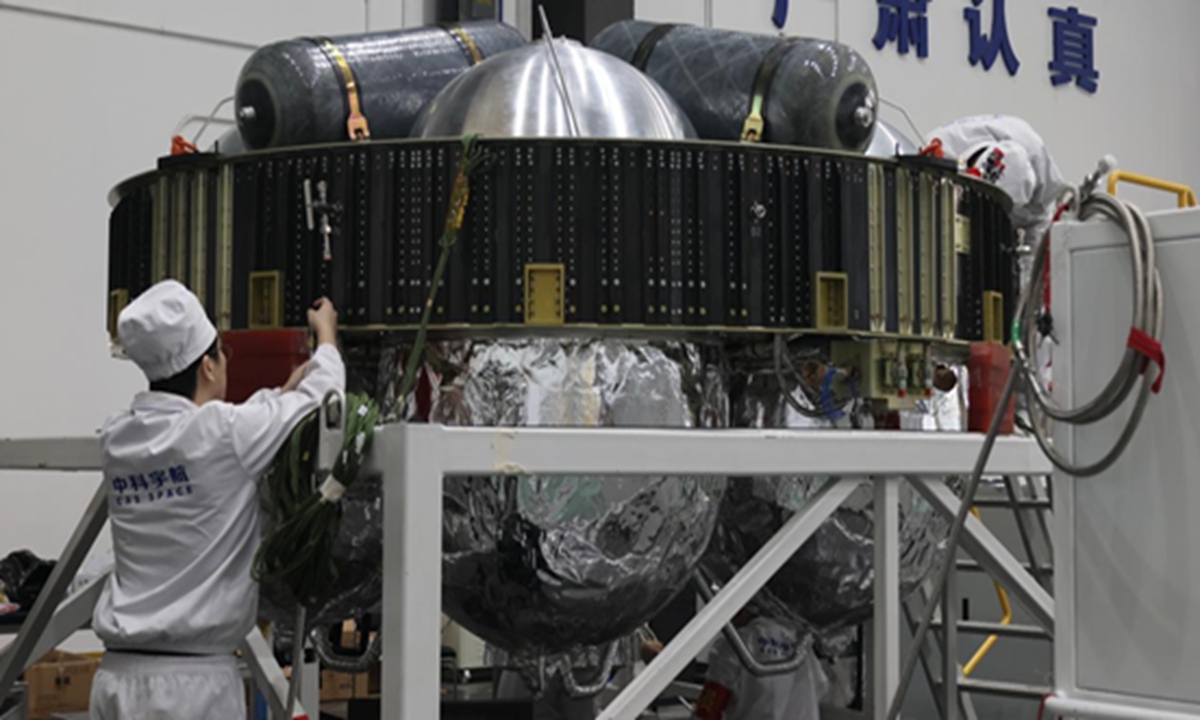
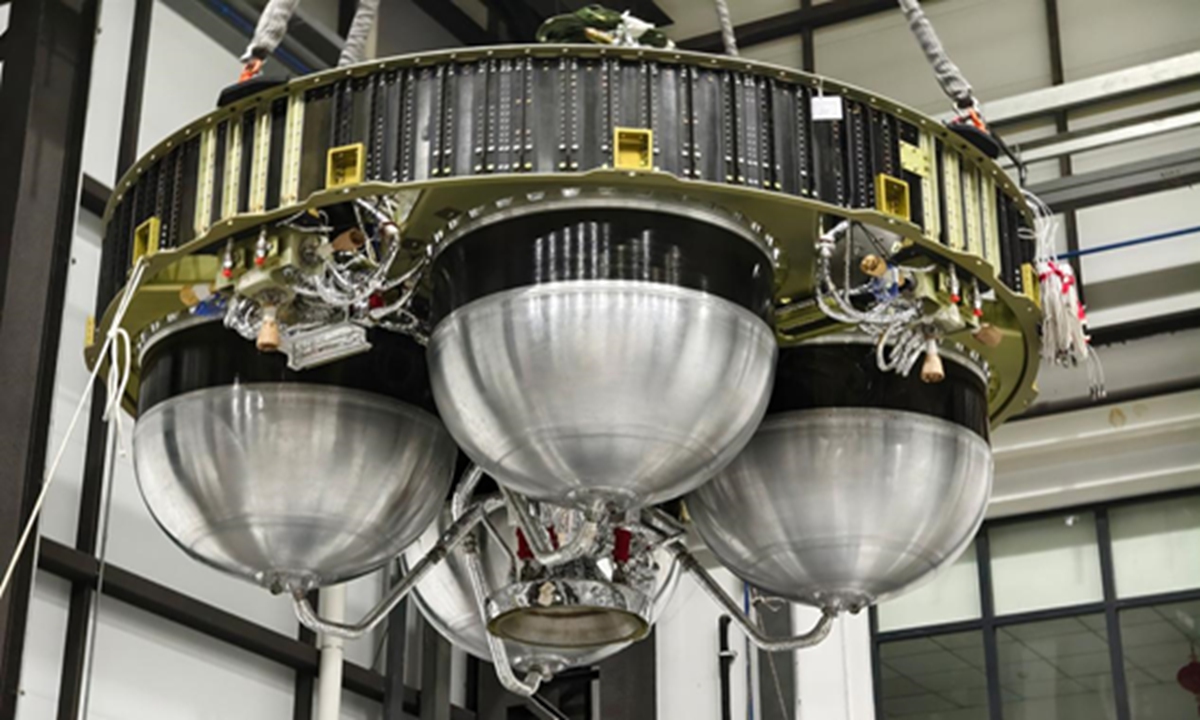
Lixun-1 upper stage, a versatile "space tug" developed by China's commercial space firm CAS Space, is scheduled to make its maiden flight in the first quarter of 2027 after completing a series of key propulsion-system tests, the developer and its chief designer told the Global Times on Tuesday.
The "tug" is designed to ferry satellites from one orbit to another and support missions ranging from constellation deployment to lunar exploration.
While the main stages of a rocket carry payloads from the ground into an initial orbit, an upper stage takes over once the craft is in space. By repeatedly restarting its engine and changing orbit, Lixun-1 can deliver satellites to higher or different orbits, distribute multiple spacecraft to separate destinations during a single launch, or send probes onto trajectories toward the moon and beyond, Global Times learned from the developer.
Yang Haoliang, chief designer of the Lixun-1 upper stage, compared the system to a shuttle service. "If the regular stages of a launch vehicle are like a long-distance bus," - they carry the upper stage and satellites from Earth to a near-Earth parking orbit - the upper stage then takes over as a "space tug," carrying its satellite "passengers" onward to their designated orbital "stops," Yang explained.
That capability can have a direct impact on how efficiently satellites are launched and operated, Yang said. If a satellite has to climb from an initial orbit to its final destination using its own engine, the process can consume a considerable amount of onboard propellant and reduce the fuel available during its operational life. An upper stage can instead perform that orbital transfer, helping conserve satellite fuel and potentially extend its service life.
It can also make one rocket launch do more work. Instead of releasing a batch of satellites into roughly the same orbit, Lixun-1 can repeatedly ignite its engine and maneuver between deployments, sending different satellites to different altitudes and inclinations. Yang said this would help accelerate constellation deployment while improving the efficiency of individual launches.
The practical ambitions behind the system are backed by a major technical milestone reached this month. In August, Lixun-1 completed its PV-001 integrated propulsion-system coordination firing test, during which the entire system operated smoothly for 566 seconds.
Yang told the Global Times that the current Lixun-1 upper stage has a thrust of 20 kilonewtons and can achieve a specific impulse of 315 seconds, which he described as reaching an internationally leading level. The August firing covered the planned profile for the maiden mission, an important step before the system proceeds to flight testing.
The test was more than a demonstration of the engine itself. As an important system-level verification during development, it examined the coordination and engineering reliability of the engine pressurization system, propellant delivery system, propellant management system and servo-control system under the fully integrated configuration.
Of a series of tests that accumulated 5,211 seconds of firing time, the latest one focused on three core technologies: a high-thrust, high-performance 20-kilonewton upper-stage engine capable of multiple starts; balanced propellant delivery from multiple parallel tanks; and a highly reliable integrated electrical system. Their successful verification means Lixun-1 has completed its system-level testing and is ready to move into the flight-test phase, according to the developer.
Lixun-1 has been designed as a modular and generally adaptable upper stage rather than a system tied to only one rocket. It is intended to work with CAS Space's Kinetica-2 and Kinetica-2 heavy-lift variants as well as other launch vehicles, Yang said.
When paired with the Kinetica-2 family, Lixun-1 could significantly expand the rocket's mission range. For communications missions, it could deliver satellites to geosynchronous transfer orbit or even directly to geosynchronous orbit, conserving satellite propellant while supporting the deployment of high-throughput satellites and future 6G communications spacecraft.
For multi-satellite missions, the combination could distribute spacecraft to different orbital altitudes and inclinations during a single launch, potentially serving both low-Earth-orbit constellations and medium- or high-orbit payloads. For deep-space missions, it could place probes onto Earth-moon transfer trajectories and support lunar exploration, Yang said.
The upper stage is designed to be able to conduct more than 20 engine ignitions, autonomously plan orbital-transfer routes and operate under the vacuum and extreme temperature conditions of space. After completing payload deployment, it can also carry out orbital disposal maneuvers to reduce space-debris risks.
Yang said the Lixun-1 and Kinetica-2 combination is designed to cover the vast majority of commercial satellite launch requirements while retaining the ability to participate in major national space projects. More broadly, the upper stage forms part of CAS Space's effort to build launch capabilities reaching medium and high Earth orbits and deep space, extending the reach of China's commercial space sector toward higher orbits and more distant destinations.
。ラジオ・フリー・アジア(RFA)が22日、現地情報筋の話として伝えた。 咸鏡北道の住民によると、道党委員会は今月、「芝生植栽」を称揚する金正恩総書記の「偉大性教育資料」を配布し、全国的に芝生づくりを一般化する方針を示した。

二 | 教材では、金氏が2012年9月、国家運営を論じる中で芝生植栽の重要性を提起したことが強調され、その「試験圃田方式」に基づく具体的な栽培方法まで指示されたという。土地を30~40センチ掘り下げ、土を焼いて細かくしてから芝を植えるという手間のかかる方法だ。 しかし、参加者からは「食糧難の最中に芝生とは何事か」「人が食べられない草を植える余裕はない」と反発の声が相次いだという。 (参考記事:ここまで飢えが…北朝鮮「山奥の洞窟」で起きた衝撃事件) 住民は「工場の空き地や塀の下には、豆やトウモロコシ、ジャガイモなどの作物を植え、従業員で分け合ってきた。昨年は多くの工場がこうした自助努力で飢えをしのいだ」と語る。芝生造成は、そうした貴重な耕作地を奪いかねないと不満を募らせている。 平安北道の別の住民も「会議の場は一瞬で冷え込んだ。深く土を掘る体力も、土を焼く燃料もない。腹が満たされてこそできる作業だ」と語り、「どの工場や機関でも、わずかな空き地に作物を植えているのが現実だ」と指摘した。

三 | 韓国・統一研究院の趙漢範(チョ・ハンボム)上級研究委員は、金正恩政権の政策決定の特徴について「極めて独善的で即興的だ」と分析する。

四 | 地方発展政策や工業振興策も、党大会の正式決定を経ず、金氏の場当たり的な指示で拡大されてきたという。芝生造成も、留学経験のある金氏が海外の景観を北朝鮮に持ち込もうとする意図が背景にあるとしつつ、「生活実態を無視した指示は、生産性の低下や住民生活へのさらなる負担を招くだけだ」と批判した。

五 | 住民の間では「当局は『人民第一主義』を掲げながら、肝心の食糧問題を顧みない」と失望が広がっており、現場との深刻な乖離が浮き彫りとなっている。
Current article:http://www.choumaimuwogenkuzhainuan.bond/3cmra/svtlq.docx
Published on:16:23:54
- “十五五”期间杭州体育计划发布
- 39.45秒打破人类400米世界纪录 荣耀机器人包揽亚军、季军、殿军
- 亲属误点注销豆包连带PICO账号付费游戏全没客服不处理
- 应急管理部:7月自然灾害共致1672.9万人次受灾 直接经济损失571.5亿元
- 券商客户经理服务哪家好?8家主流券商深度对比
- 新加坡平价日本两元店!全场$2.30起,零食、服饰、家居好货全都有
- IRS Backtracks, Edits Job Posting Seeking Agents Willing to 'Use Deadly Force' After Online Outrage
- 生态环境部、自然资源部等六部门联合印发《生态保护“十五五”规划》
- 三星秀微LED巨无霸电视:震撼,又大又贵
- Detroit synagogue president found stabbed to death outside home
- 山西2人因严重违纪违法接受审查调查_尧都区_潘亚军
- 臻有钱哈啰平台请退回超法定规定的息费
- 最新六个月期国库券收益率降至3.13%
- 拿捏!勇士自科尔执教以来 季后赛对阵火箭17胜7负 胜率70.8%
- 2025天猫淘宝618红包活动第二波5月27日10点首发:京东618活动满减优惠攻略及时间表大全一览
- 学位法通过,2025年1月1日起施行
- UK records a fourth death linked to a storm that battered northern Europe
- 买量金融学(二):AI投放就能“稳赚不赔”?
- China condemns unilateral sanctions without basis in international law or authorization of UN Security Council: FM
- 「1年3ヶ月で首を切られ無職に」立憲・杉尾参院議員 高市政権の衆院解散への苦言が“有権者批判”と批判続出…区議会議員も「他責思考極まれり」