
使徒行者
中国足球如何应对世预赛扩军?_我的网站

一 |
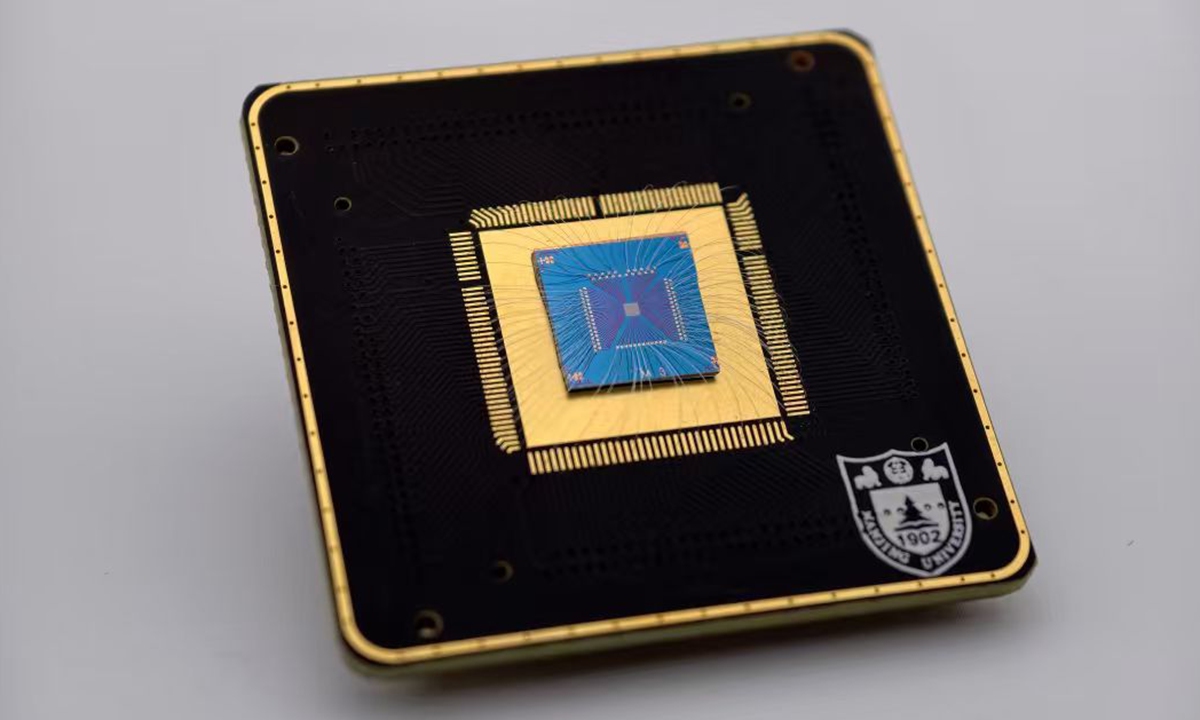
A Chinese research team from Nanjing University has developed a new ultra-low-power intelligent vision sensor chip, dubbed "LightTok," that can convert light signals into tokens within the sensor, significantly reducing the high energy consumption caused by frequent transfers of massive amounts of redundant data, the principal investigator told the Global Times.
According to a release from the Institute of Brain-Inspired Intelligence of Nanjing University, tokens generated by the LightTok chip can be directly fed into a Transformer encoder for image recognition.
"Our design idea was to move token generation onto the sensor itself, allowing the chip to directly produce tokens that AI models can process once light reaches the sensor," Miao Feng, director of the Institute of Brain-Inspired Intelligence at Nanjing University, told the Global Times on Thursday. "These tokens contain complete image information."
Physical AI refers to intelligent systems capable of autonomously perceiving, reasoning, acting and receiving feedback in the real world, representing a key pathway for AI to move from the digital realm into the physical world. Vision-based physical AI systems powered by large AI models need to convert visual information from real-world environments into tokens that can be processed by AI models before feeding these tokens into Transformers for subsequent tasks.
In traditional visual perception pipelines, light signals must go through multiple stages, including image sensing, analog-to-digital conversion, data buffering and transfer, digital image patching and embedding, before being transformed into tokens that AI models can process. The frequent transfer of massive amounts of redundant data has resulted in high energy consumption at the edge, according to a report by Science and Technology Daily.
The LightTok chip directly addresses a key challenge in physical AI hardware: how to efficiently acquire and tokenize visual information from the physical world with low energy consumption, Miao said.
The LightTok chip consists of a photosensitive memory array and peripheral circuits. The team built the array based on single-layer molybdenum disulfide (MoS₂) floating-gate phototransistors, with each pixel capable of sensing light, storing information and performing analog computing. By processing optical information directly within the chip, the device can convert captured visual signals into tokens for AI models, according to the research team.
The current LightTok prototype has a resolution of 32×32 pixels, or 1,024 photosensitive pixels, which is still smaller than that of smartphone cameras and industrial imaging systems. However, Miao said the technology is compatible with CMOS manufacturing processes and can be scaled up. With wafer-level growth of molybdenum disulfide materials, the chip could potentially achieve a scale comparable to existing imaging devices.
Miao said the chip also draws inspiration from the information-processing mechanism of human vision. Similar to how the retina extracts key visual information before transmitting it to the brain, the chip also aims to process visual information at an early stage.
The research was conducted in collaboration with another research team from the National University of Singapore. The findings were published on Wednesday in Nature Sensors, an internationally renowned journal in the field of sensing technology, according to the release.
Potential applications for LightTok include drone systems, autonomous remote sensing and small-scale embodied AI systems, Miao said. In these scenarios, devices need to continuously detect, understand and track targets, generating massive amounts of visual data. By reducing the energy required for visual processing, the technology could extend the operating time of drones, satellites and small robots with limited power supplies, the expert said.
。

二 | 亚足联执委会也最终通过了亚足联下属竞赛委员会所提交的竞赛方案。预选赛将分4个阶段展开 根据最新的竞赛方案,2026年世界杯亚洲区预选赛将分为4个阶段展开。第一阶段:先由排名靠后的弱队展开一轮主客场制淘汰赛。这与2018年以及2022年两届世界杯亚洲区第一阶段比赛相类似。根据抽签之前的国际足联最新排名情况,亚洲排名第26至47位的队伍先进行一轮主客场制淘汰赛,胜者将参加第二阶段比赛。比赛安排在2023年10月份的国家队比赛窗口期进行。第二阶段:由前两届的“40强赛”变成“36强赛”。

三 | 第一阶段获胜的11支队伍,加上亚洲排名第1至第25位的队伍共36队,将分成九个小组、每组4队,以主客场制进行,按照积分排定座次。每个小组的前两名出线,进入第三阶段“18强赛”。比赛安排在2023年11月份、2024年3月份、2024年6月份的国家队比赛窗口期进行。

四 | 第三阶段:由前两届的“12强赛”变成“18强赛”。这18支球队将根据国际足联最新排名分成三个小组、每组6队,以主客场制进行,按积分排定座次。每个小组的前两名出线、直接进军世界杯决赛阶段比赛,产生6支出线队;每个小组的第三、第四名则将获得第四阶段附加赛资格;小组第五、第六名则直接被淘汰。比赛安排在2024年9月份至2025年6月份的国家队比赛窗口期进行,共10个比赛日。

五 | 第四阶段:在这一阶段附加赛中,三个小组的第三、第四名共6支球队再按国际足联最新排名进行分组抽签,分成两个小组、每组3队,以单循环赛制、按积分排定座次。两个小组的第一名成为亚洲区第七、第八支出线队;两个小组的第二名则再展开一轮主客场制淘汰赛,以争夺亚洲区第九名、参加跨洲附加赛。比赛将安排在2025年9月份至10月份的国家队比赛窗口期进行。这意味着代表亚洲直接参加2026年世界杯赛的8支球队将分两个阶段产生,而第九名球队能否同时获得世界杯入场券,则将取决于跨洲附加赛的成绩。2027亚洲杯与世预赛重合 需要指出的是,考虑到国家队比赛窗口期的问题,亚足联除了敲定世界杯预选赛竞赛方案之外,也敲定了2027年亚洲杯预选赛的竞赛方案。延续前两届亚洲杯预选赛的情况,即亚洲杯预选赛前期与世预赛将“合二为一”。第一阶段预选赛:与世预赛第一阶段淘汰赛一样,亚洲排名靠后的22支球队先进行主客场制淘汰赛,除了11支取胜的球队晋级世预赛第二阶段比赛之外,11支失利的队伍中,成绩最好的一支队伍将直接进入亚洲杯预选赛第三阶段比赛,其他10支队伍则进入亚洲杯预选赛第二阶段比赛。第二阶段预选赛:10支在第一阶段比赛中失利的球队将按照国际足联排名敲定对阵形势,获胜的5支球队将进入第三阶段比赛。

六 | 比赛将在2024年9月份进行主客场制淘汰赛。第三阶段预选赛:第二阶段中获胜的5支球队,加上第一阶段预选赛中成绩最好的一支失利的队伍共6队,再加上世界杯预选赛第二阶段36强赛中小组未能出线的18支队伍,总共24队,将分为六个小组,每组4队,进行主客场制比赛。六个小组第一名将获得决赛阶段比赛资格。比赛时间为2025年的6月份至2026年的3月份,利用国际足联指定的国家队比赛日进行。需要指出的是,获得世界杯预选赛第三阶段18强赛参赛资格的队伍,将自动获得2027年亚洲杯决赛阶段比赛资格。亚洲杯预选赛第三阶段预选赛就只是产生6个最后的参赛席位。24队将参加2027年亚洲杯决赛阶段比赛。这样,整个2026年世界杯亚洲区预选赛、2027年亚洲杯预选赛的赛制、赛程就已经完全敲定。接下来,就是各队将如何根据这样的赛制、赛程展开全方位的准备了。从理论上来说,中国男足进军世界杯赛的机会与希望肯定是较以往大幅度提升,但中国男足的竞技水准却着实难以令国人满意。

七 | 面对新的机遇、新的诱惑,中国足球接下来将如何应对,这恐怕比世预赛赛制、赛程本身更令球迷关注。相关 亚足联推出未来4年赛历 国字号球队面临考验 亚足联于8月1日公布了2026年世界杯预选赛以及2027年亚洲杯预选赛的全新竞赛方案,敲定赛制与赛程的同时,也推出了未来4年周期内亚足联主办的其他各项国字号球队的赛事日程,U17国少队、U20国青队、U23国奥队均面临严峻的挑战与考验。根据亚足联拟定的最新赛程,下一届U23亚洲杯赛暨2024年巴黎奥运会男足亚洲区预选赛竞赛时间已敲定,参赛队员为2001年1月1日以后出生的球员。由成耀东挂帅的2001年龄段国青队将确认参赛,球队将于本月5日前往克罗地亚进行拉练、热身。第六届U23亚洲杯预选赛定于2023年9月4日至12日进行;决赛阶段比赛则定于2024年1月10日至28日进行。值得注意的是,由于2022年杭州亚运会已经确认延至2023年9月23日至10月8日进行,由扬科维奇所率的1999年龄段国足亚运队将吸纳部分2001年龄段球员,如陶强龙、刘祝润,中国足协将协调两队用人问题。2026年第七届U23亚洲杯的预选赛则定于2025年9月6日至14日进行,决赛阶段比赛则定于2026年1月7日至25日进行。由西班牙教练安东尼奥挂帅的中国2003年龄段U19国青队目前正在塞尔维亚集训,并将参加今年9月份在沙特进行的U20亚洲杯预选赛小组赛。

八 | 决赛阶段比赛将安排在2023年3月1日至18日进行,地点在乌兹别克斯坦。由2005年龄段国青队参加的2025年U20亚洲杯预选赛定于2024年9月21日至29日进行,决赛阶段比赛则定于2025年2月6日至23日进行。由2007年龄段国少队参加的2027年U20亚洲杯预选赛定于2026年9月19日至27日进行,决赛阶段比赛的时间则将稍后再敲定。由杨晨挂帅的中国2006年龄段U16国少队不久前刚刚结束在武汉的集训热身,随后将参加今年10月在澳大利亚进行的U17亚洲杯预选赛小组赛。

九 | 由2008年龄段国少队参加的2025年U17亚洲杯预选赛定于2024年10月19日至27日进行,决赛阶段比赛则定于2025年4月3日至20日进行。由2010年龄段队伍参加的2027年U17亚洲杯预选赛定于2026年10月17日至25日进行,而决赛阶段比赛的时间则将稍后再敲定。至此,多个年龄段国字号青少年梯队的竞赛日程均已经全部敲定。本组文/马德兴 【编辑:叶攀】
Current article:http://www.choumaimuwogenkuzhainuan.bond/list_ga9/ny7.pptx
Published on:07:32:46
 业内人士爆料:中国游客被遗弃系低价旅游团问题!强制消费或为默许
 大神集齐GBA全部791款游戏 合影太壮观价值一辆汽车
 Ram Charan’s Peddi Vs Nani’s The Paradise! Can a Box Office Clash Be Avoided? Here's The Truth
 米「相互関税」24日終了 最高裁が違法判決
 “十五五”开局看河北|邯郸“五链并进”培育壮大新能源产业
 A500ETF成交突然霸屏,是何原因?