
qq音乐
Paramvir Singh Cheema on Working With Kriti Sanon and Dhanush in Tere Ishk Mein_我的网站

一 | Paramvir Singh Cheema was recently seen in Tere Ishk Mein. He stepped onto the big screen as Jasjeet. Now, the actor reflects on working alongside two of the film’s biggest stars, Kriti Sanon and Dhanush. Speaking about working with Kriti, he says, "To work with Kriti was very easy and the energy flow was so good. She is very humble and very committed to her craft. A co-actor everyone wishes to work with. I wish to work more with her."On collaborating with Dhanush, Paramvir says, "Dhanush Bhai is very calm and peaceful. Gives so much respect and enjoys his personal space as I do. We used to sit together quietly without even talking to each other sometimes and those moments are priceless. To watch him perform was breathtaking. Looking forward to work with him in future, maybe under his direction."Kriti Sanon once opened up about her character in the movie. She said, "There are some things that did connect, though a lot of things that Mukti does I wouldn’t do, but I think in the beginning, there is a certain purity, you know, she’s almost naive. Where she believes in good, she believes in the good in people." Tere Ishk Mein released on November 28, 2025. Our reviewer gave the movie 3 stars. He said, "Tere Ishk Mein is a pure, unfiltered Aanand L Rai vehicle. It will move some to tears and leave others exasperated. It is a film of stirring highs and distracting inconsistencies, of performances that soar and storytelling that sometimes slips. But it never, not for a moment, plays it safe. For those who’ll surrender to its heightened romanticism, it’ll offer an emotional storm impossible to forget. For others, the same storm might feel like too much weather for one film."Also Read: Tere Ishq Mein Box Office Day 2: Dhanush’s Film Crosses 30 Crore in Two Days。
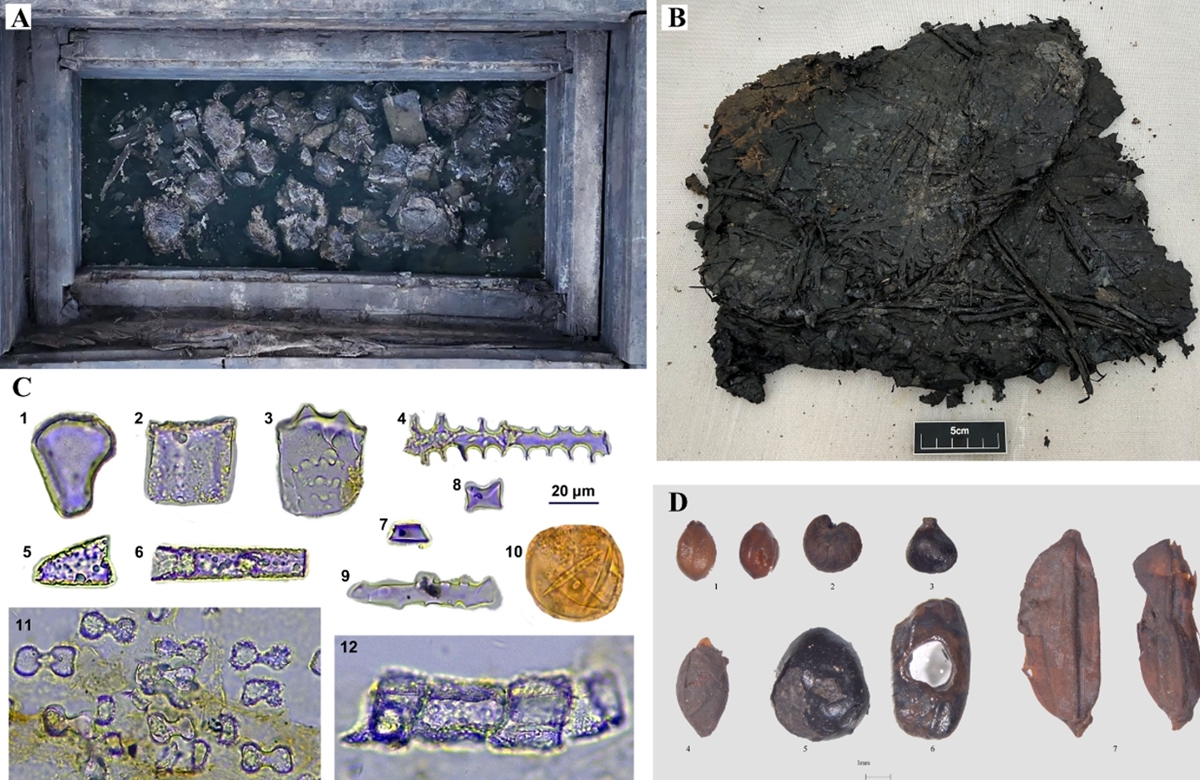
In March 2024, archaeologists from the National Center for Archaeology excavated a large number of well-preserved, waterlogged plant bundles from the tomb's outer coffin chamber. On-site, the plant bundles could be seen tightly wrapped in broad leaves and tied with plant-fiber cords.
A team of researchers led by the National Center for Archaeology, IVPP, and the Chinese Academy of Social Sciences examined 12 of the bundles and found that the wrapping leaves came from oak trees, while the cords were made from grasses.
The bundles mainly contained rice, broomcorn millet, foxtail millet, and cereal seeds, most of which were still in their husks and mixed with inflorescence material. Small amounts of peppercorn, mallow and rice-field weed seeds were also found.
The fact that the bundles were found in a tomb and mainly contained grains still in their husks suggests they were not everyday food, but offerings intended for funerary rituals. "This might reflect a Warring States-era belief that grains served as wealth for the dead in the underworld," Ge Yong, an associate researcher at the IVPP and the study's corresponding author, told the Global Times.
A Qin Dynasty (221BC-206BC) text describes a belief that "soybeans were gold and millet was money" for the dead, indicating that grains held symbolic significance in funerary culture. "The bundles therefore appear to have been ritual offerings prepared for the deceased," Ge said, "not food for the living."
The physical structure of the bundles also resembles that of zongzi, with grains wrapped in leaves and tightly secured with plant-fiber cords. "Similar practices of wrapping grains for burial have also been found elsewhere within the Chu cultural sphere," Ge said, "such as at the Chengyangcheng Site."
At the Chengyangcheng archaeological site in Henan Province, rice and broomcorn millet were also discovered wrapped in oak leaves. "An interesting fact is that we can still find zongzi wrapped with the same oak leaves now in regions related to the Chu cultural sphere."
"The findings suggest that wrapping grains as funerary offerings was a relatively common practice in the Chu state during the Warring States period," Ge said. "And this practice may have been an early form of the zongzi later associated with the legend of Qu Yuan."
These plant bundles share a structure similar to that of modern zongzi and to those described in legends and folklore. This might reflect how, through cultural exchange and heritage, these 2,200-year-old plant bundles likely evolved over centuries, shifting from sacrificial offerings to food, said Ge.
As diverse regional populations adapted the practice, it eventually transformed into the well-known Dragon Boat Festival tradition of eating zongzi. Thus, this structural resemblance might suggest a potential historical lineage; however, experts stressed that the Wuwangdun bundles should not simply be labelled as ancient zongzi.
"We can't define these plant bundles as the earliest zongzi, but rather, we can confirm that by 2,200 years ago at the latest, the Chu region had established a tradition of using this specific form of plant bundles for funeral rites. And this tradition could be a possible origin or precursor of the well-known zongzi," said Ge.
He added that the discovery provides critical physical evidence to explore the origins of zongzi and its cultural heritage.
。
Current article:http://www.choumaimuwogenkuzhainuan.bond/news/20260826_66909.html
Published on:20:50:21
栏目相关
- 《巫师 3:狂猎 — 重制版》官宣 9 月 29 日上线:所有玩家免费升级,两部资料片免费送
- 绝美限定时装!魔域口袋版花魁赛即将开启
- 中国早稻产量连续6年稳定在560亿斤以上,中国早稻产量连续6年稳定在560亿斤以上
- 萨维尼奥同时登上溢价榜和捡漏榜:曼城2150镑买下,8500万镑出售
- 50人!事业单位,公开招聘
- China’s deep-processed agri-goods fuel higher-value trade growth
- 游泳装备选购指南
- 2026年度百校千团“冀企行”在石家庄启动 242个高校科研团队将深入企业靶向攻关
- 德广联:德国央行行长放风 欧洲央行加息不足以遏制通胀进一步加息势在必行_内格尔_Nagel
- 布兰登-米勒:要从输球中成长 彼此信任坚定向前
- 队报:非洲足联全票支持国际足联主席因凡蒂诺
- 光伏“反内卷”遇到了“鬼故事”
热门排行
- 伊朗称霍尔木兹海峡临时航线谅解达成 仅限商船通行
- China to issue 6 billion yuan in sovereign bonds in Macao
- 男子不慎将自己锁在汽车后备箱:近 40℃ 高温被困约 5 小时,靠喊语音助手报警获救
- 民政部:今年上半年全国民政事业支出2436亿元
- The Witcher 3 资料片 Songs of the Past 确认将包含更多 巫师之昆特牌 内容,玩家们已纷纷开始庆祝。
- Angola to Play Peacemaker by Hosting DR Congo-Rwanda Meeting Amid Threats of War
- 谷歌自研 Frozen v2 AI 芯片曝光,单位功耗算力提升 6–10 倍,瞄准智能体推理场景
- 2024年度冬春火灾防控工作暨电动自行车整治专班第五次全体会议召开
- 北京体彩“迈开步 动出彩”运动嘉年华燃动老故事503文创园
- 我国科学家首次证实:昆虫超声波通讯 1.65 亿年前已出现
- 小米混合3麦芽处理机试验:刮刀烧灼样
- 熊猫31.5英寸2K 165Hz显示器上架!999元